
Why Neurodiversity and STEAM Design Belong Together for Future Innovators
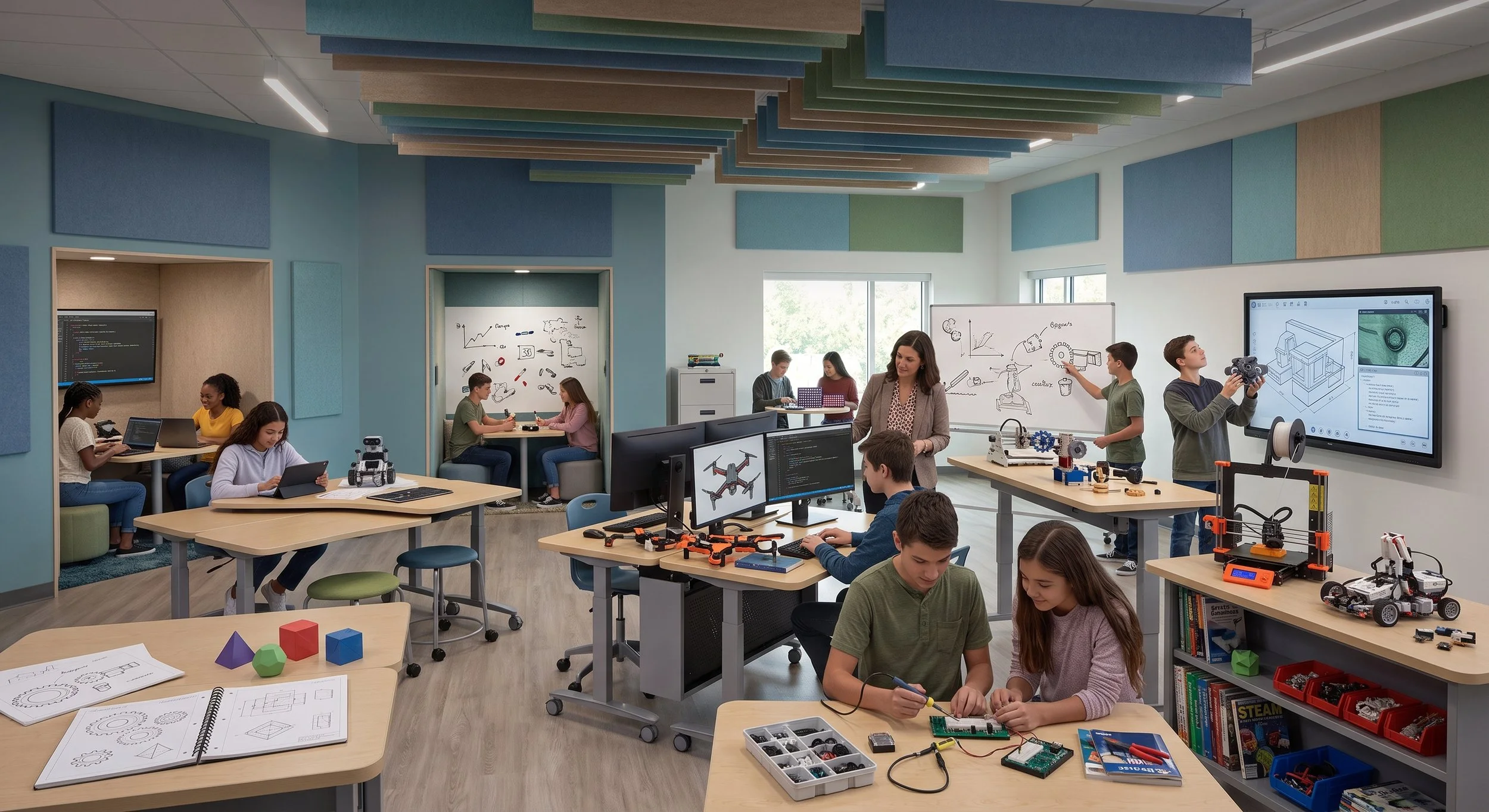
In the world of science, technology, engineering, arts, and mathematics (STEAM), innovation relies on thinking differently. Global tech leaders and research institutions actively recruit neurodivergent talent specifically for their unique cognitive strengths—from deep pattern recognition to extraordinary visual-spatial reasoning.
Yet, long before these individuals enter the workforce, many are turned away from STEAM pathways during their school years. The culprit isn't a lack of interest or ability; it is often the environment itself. Traditional makerspaces, science labs, and computer rooms are frequently chaotic, noisy, and visually overwhelming, creating environmental friction that drains executive functioning.
At Oxilium, we believe that to capture and nurture this talent, learning spaces must be designed for how minds actually work. Here is why neurodiversity naturally aligns with STEAM—and how intentional, neuro-inclusive design can unlock the full potential of every student.
The Natural Synergy Between Neurodiversity and STEAM
Neurodivergent minds possess cognitive profiles that are exceptionally well-suited for STEAM disciplines:
Autism and Systemizing: Autistic individuals often excel at pattern recognition, logic, error detection, and deep focus (hyperfocus). Studies show that autistic students enter STEM fields at significantly higher rates than the general population, thriving in fields like coding, data analysis, and structural engineering.
ADHD and Divergent Thinking: Innovation in STEAM requires experimentation and creative risk-taking. Individuals with ADHD frequently display remarkable divergent thinking and out-of-the-box problem-solving—the exact traits needed to iterate solutions in engineering and the arts.
Dyslexia and Visual-Spatial Reasoning: While dyslexia affects language processing, it is strongly linked to superior 3D visualization and spatial awareness. These strengths are invaluable in architecture, mechanical design, and digital modeling.
The Hidden Barrier: Traditional STEAM Labs
Despite this natural aptitude, traditional STEAM rooms can inadvertently create overwhelming sensory friction. A typical lab with echoing hard surfaces, flickering fluorescent lights, cluttered wiring, and rigid high-stool seating forces neurodivergent students to spend valuable mental energy regulating their nervous system rather than focusing on the curriculum.
When a space causes sensory overload or physical discomfort, student engagement drops. Creating true inclusion in STEAM requires moving beyond standard compliance and building environments tailored to human sensory and cognitive needs.
Building Neuro-Inclusive STEAM Spaces: Belonging by Design
When Oxilium designs a STEAM ecosystem, we focus on eliminating spatial friction so students can focus, collaborate, and innovate without distraction. Here is how we transform these environments:
1. Integrated Acoustic and Sensory Zoning
STEAM learning is inherently hands-on and often noisy. By integrating sound-dampening materials, acoustic dividers, and dedicated low-sensory decompression nooks, we allow students who experience sensory overload to step back and regulate without having to leave the learning environment entirely.
2. Agile, Ergonomic Furniture
For many neurodivergent learners, movement is a prerequisite for focus. Static lab stools and heavy, immovable tables restrict the body and hinder cognitive performance. We curate mobile, height-adjustable workstations and active seating options that allow students to easily shift between individual focus, standing collaboration, and hands-on building.
3. Invisible Technology Infrastructure
Robotics, 3D printing, and digital art require significant hardware, but tangled cords and exposed power sources create visual noise that drains focus. We design custom ecosystems with integrated AV and IT infrastructure, keeping power accessible while maintaining a clean, calm, and distraction-free layout.
Designing for the Minds of Tomorrow
When you remove environmental barriers from a STEAM lab, you do more than just upgrade a room—you empower future engineers, artists, developers, and scientists to thrive as their authentic selves.
At Oxilium, every project starts with a complimentary learning space design consultation. Our in-house designer works directly with your team to understand your school's unique instructional goals, evaluate your floor plans, and build a neuro-inclusive STEAM environment tailored to your students and educators.
Ready to transform your STEAM spaces? Connect with the Oxilium team today to schedule your free spatial design consultation.