
Tuning Out the Noise: Next-Gen Audio to Support Neurodiverse Minds in Meeting Rooms
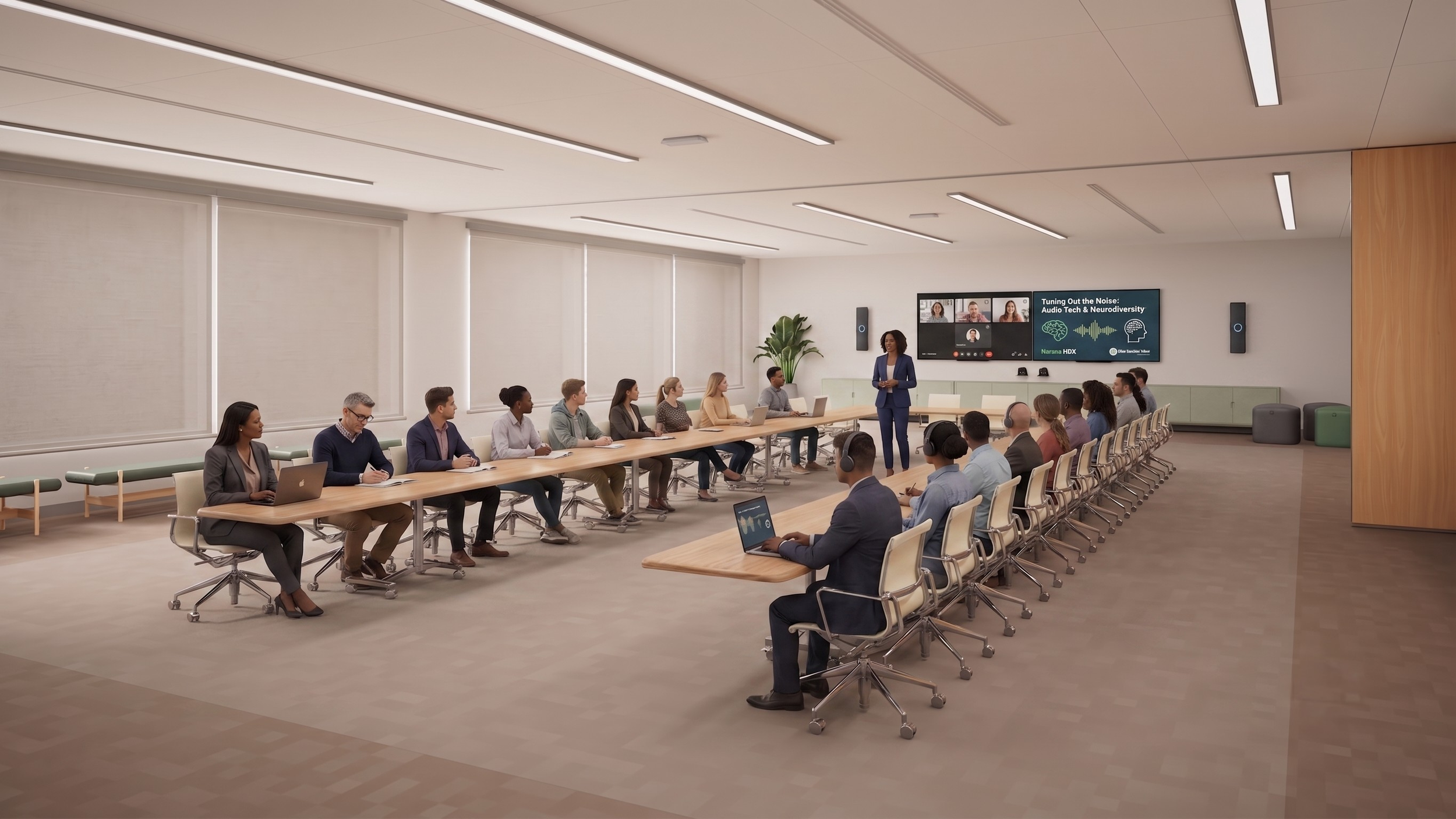
Picture this: You are sitting in a crucial corporate presentation or a university seminar. The speaker is talking, but so is the HVAC system. Outside the glass wall, a colleague is laughing. To your left, someone is typing at lightning speed on a mechanical keyboard.
For many, these background noises are easily filtered out by the brain's automatic volume knob. But for neurodiverse individuals—including those with ADHD, Autism, Dyslexia, or Sensory Processing Sensitivity—a meeting room isn't just a room. It is a chaotic, overwhelming wall of sound.
Creating truly inclusive spaces means understanding how neuro-intelligent minds process information and leveraging modern audio technology to clear the cognitive static.
The Neurodiverse Brain in a Noisy Room
Neurodiversity embraces the idea that brains are wired differently. When it comes to sensory input, neuro-intelligent minds often experience the world with the volume turned all the way up.
In a standard meeting room, two major hurdles impact focus and engagement:
The Lack of an "Audio Filter": Neurotypical brains excel at auditory gating—the ability to unconsciously filter out irrelevant sounds (like a humming projector) to focus on a single voice. For neurodiverse individuals, this filter can be porous or non-existent. Every single sound arrives at the brain with equal urgency.
The Cognitive Load Tax: When a brain has to work exponentially harder to separate a speaker’s voice from the hum of traffic outside or whispering nearby, it burns through cognitive energy rapidly. This leads to sensory fatigue, causing focus to plummet and engagement to turn into exhaustion.
When a room fails acoustically, we aren't just losing audio quality; we are losing the valuable insights of neurodiverse talent.
Enter the Solution: Nureva HDX and Patented Microphone Mist™ Tech
To support how neurodiverse minds process important information, meeting rooms need to do more than just blast sound through a loudspeaker. They need intelligent audio ecosystem design. This is where the Nureva HDX pro audio series changes the game.
Built specifically for large, challenging spaces like corporate boardrooms and training environments, the Nureva HDX series utilizes patented Microphone Mist technology. Instead of relying on traditional directional microphones that only pick up sound in fixed sweet spots, Microphone Mist fills a room with thousands of virtual microphones.
How HDX Supports the Neurodiverse Mind:
Consistent Audio Levels: No matter where a speaker moves or turns their back to face a whiteboard, their voice is picked up with perfect clarity. For a neurodiverse listener, this eliminates the jarring volume drops that break concentration.
Adaptive Voice Lift & Noise Suppression AI: The HDX system dynamically enhances the clarity of human voices while its AI actively suppresses disruptive background noises (like that relentless keyboard typing or shuffling papers). By doing the heavy lifting of filtering out the junk noise, the technology drastically reduces the cognitive load on the listener.
Direct-to-Ear Inclusion: The Power of Auracast™
Even with incredible room speakers, some neuro-intelligent minds require an ultra-focused, direct audio feed to fully engage. Nureva has solved this by integrating Auracast™ broadcast audio straight into the HDX series.
Auracast is a revolutionary, next-generation Bluetooth® LE Audio technology that functions as an advanced, seamless assistive listening system.
Instead of messing around with clunky, old-school venue headsets or dealing with the latency and pairing headaches of traditional Bluetooth, users can stream the crisp, clean audio feed from the Nureva HDX system directly into their own compatible earbuds, headphones, or hearing aids.
By bringing the speaker's voice directly into the listener’s ears—and pairing it with the user's own preferred passive or active noise cancellation—Auracast effectively shuts out the physical room's distractions. The outside traffic disappears, the room echoes fade, and the important information lands exactly where it needs to: clearly and calmly into the brain.
Designing for Every Mind
True workplace accessibility isn't just about wheelchair ramps and adjustable desks; it's about sensory equity. When organizations invest in intelligent audio setups like the Nureva HDX series with Auracast, they aren't just upgrading their IT hardware. They are creating a psychological safe haven where neuro-intelligent minds can stop fighting the room and start engaging with the ideas.
By clearing the acoustic clutter, we give everyone the clarity they need to thrive.
How does your current workspace handle sensory distractions? Let's discuss how we can build more acoustically inclusive environments in the comments below!