
Dynamic Classroom Logistics: How Mobile Infrastructure Unlocks Differentiated Learning
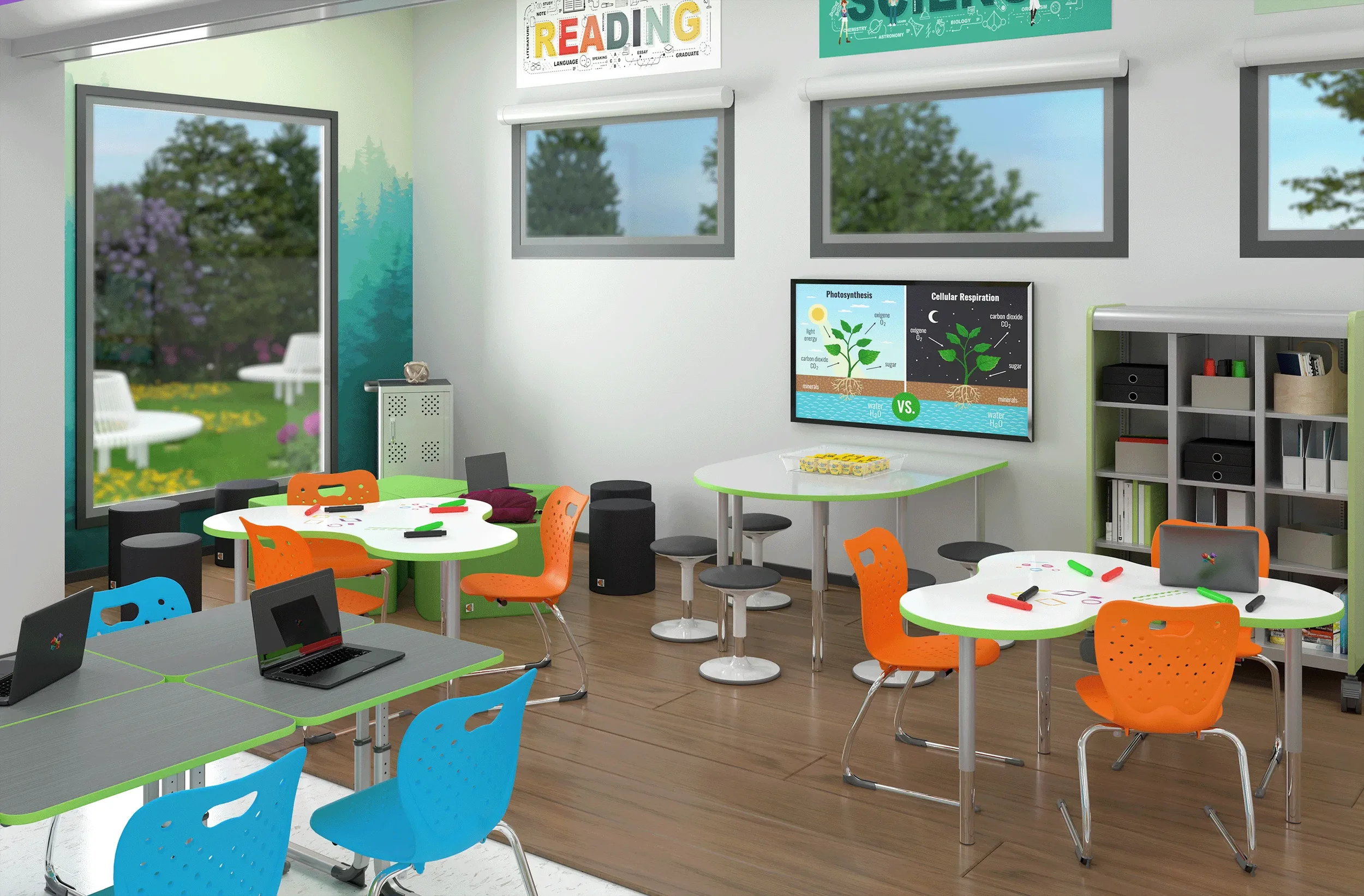
Modern pedagogy heavily emphasizes flexibility, project-based learning, and student collaboration. However, a significant physical barrier often stands in the way of these instructional goals: the static classroom layout. If a classroom's physical tools, technology, and power lines are permanently anchored to fixed perimeter walls, the environment remains stuck in a traditional, industrialized setup that favors compliance over collaboration.
This structural rigidity presents an acute challenge for neurodivergent students. Learners with ADHD, autism, or sensory processing sensitivities often require frequent environmental modifications to match their immediate cognitive and emotional states. Furthermore, traditional workarounds—such as running a web of extension cords across the floor to power student devices—introduce a high degree of physical hazard and intense visual clutter, fueling student anxiety and distraction.
To achieve a truly inclusive space, districts must mobilize their technology and utilities. Shifting to an agile infrastructure powered by mobile carts and flexible furniture allows schools to eliminate physical friction and effortlessly adapt environments to individual learning styles.
The Hidden Cost of Fixed Learning Spaces
When a classroom layout cannot change, students are forced to adapt to the furniture, rather than the furniture adapting to the students. For many neurodiverse learners, this spatial mismatch results in rapid cognitive depletion.
For instance, an autistic student who becomes visually or textually overwhelmed during a high-energy group project cannot easily find a low-stimulus workspace if all the desks are locked into a centralized cluster. Conversely, a student with ADHD who needs a brief change of posture or location to regain focus is trapped by a rigid seating arrangement.
Fixed environments also lengthen transition times. The physical friction of moving heavy tables or untangling cords disrupts the rhythm of the class, creating unstructured gaps where behavioral issues and anxiety are most likely to spike.
Key Pillars of a Mobile Logistics Infrastructure
Overcoming these spatial barriers requires a logistical framework built around three core mobile elements: centralized charging, point-of-use tool delivery, and dynamic room zoning.
1. Centralized Power via Mobile Charging Stations
A modern, tech-enabled curriculum requires a reliable power source, but wall outlets are a finite, poorly distributed resource in older school buildings.
Implementing high-density EdTech charging stations built into mobile carts solves this spatial bottleneck. These units allow an entire fleet of laptops, tablets, or specialized devices to be securely stored, updated, and charged in a single, compact footprint.
When devices are needed, the entire station can be rolled directly to a student work cluster. This mobile delivery system eliminates the need for students to crowd around perimeter walls to charge their equipment, removes dangerous cord clutter from the floor, and keeps the learning area neat and visually organized.
2. Point-of-Use Tool Delivery with Mobile STEM Carts
Hands-on, collaborative learning—such as building prototypes in a STEAM lab or organizing sensory manipulatives—requires a large volume of physical supplies. In a traditional classroom, these items are kept in fixed cabinets, leading to crowded supply lines and lost instructional time as students gather to collect materials.
Deploying heavy-duty mobile STEM carts and utility bins reorganizes this logistical flow:
Frictionless Accessibility: Carts feature clear, accessible bins and integrated pegboards that keep tools visible and organized, helping students with executive function challenges find what they need without feeling overwhelmed.
Instructional Agility: Teachers can pre-load specific carts with task-targeted materials and roll them directly to collaborative groups, ensuring that resources arrive exactly when and where they are needed.
Visual Simplification: Once an activity concludes, supplies are packed back into the enclosed cart and rolled out of the main sightline, instantly removing visual distractions from the room.
3. Fluid Room Zoning with Agility-Ready Assets
A neuro-intelligent classroom shouldn't change its layout once a semester; it should be capable of adapting multiple times a day. By utilizing lightweight, modular furniture paired with industrial-grade casters, educators can implement a highly responsive classroom zoning layout.
Large mobile tool carts and partition-backed charging stations can serve a double purpose as physical room dividers. A teacher can quickly pivot a mobile cart to shield a quiet retreat corner from the visual busyness of a peer collaboration zone.
Because these assets roll smoothly, a single instructor or a small group of students can completely reconfigure a room's boundaries in under two minutes, smoothly transitioning the environment from direct instruction to small-group testing.
The Administrative ROI of Flexible Technology
For district leadership, upgrading to a mobile infrastructure provides a clear return on investment by maximizing the utility of existing school real estate. Instead of building expensive, single-purpose computer labs or dedicated sensory rooms, a mobile logistics strategy allows a standard classroom to flex and serve all of those functions on demand.
By investing in high-quality, flexible classroom technology and mobile support systems, districts can build adaptive learning environments that easily scale to match the diverse cognitive needs of their student population.