
How Adaptable Furniture Supports Neurodiverse Students
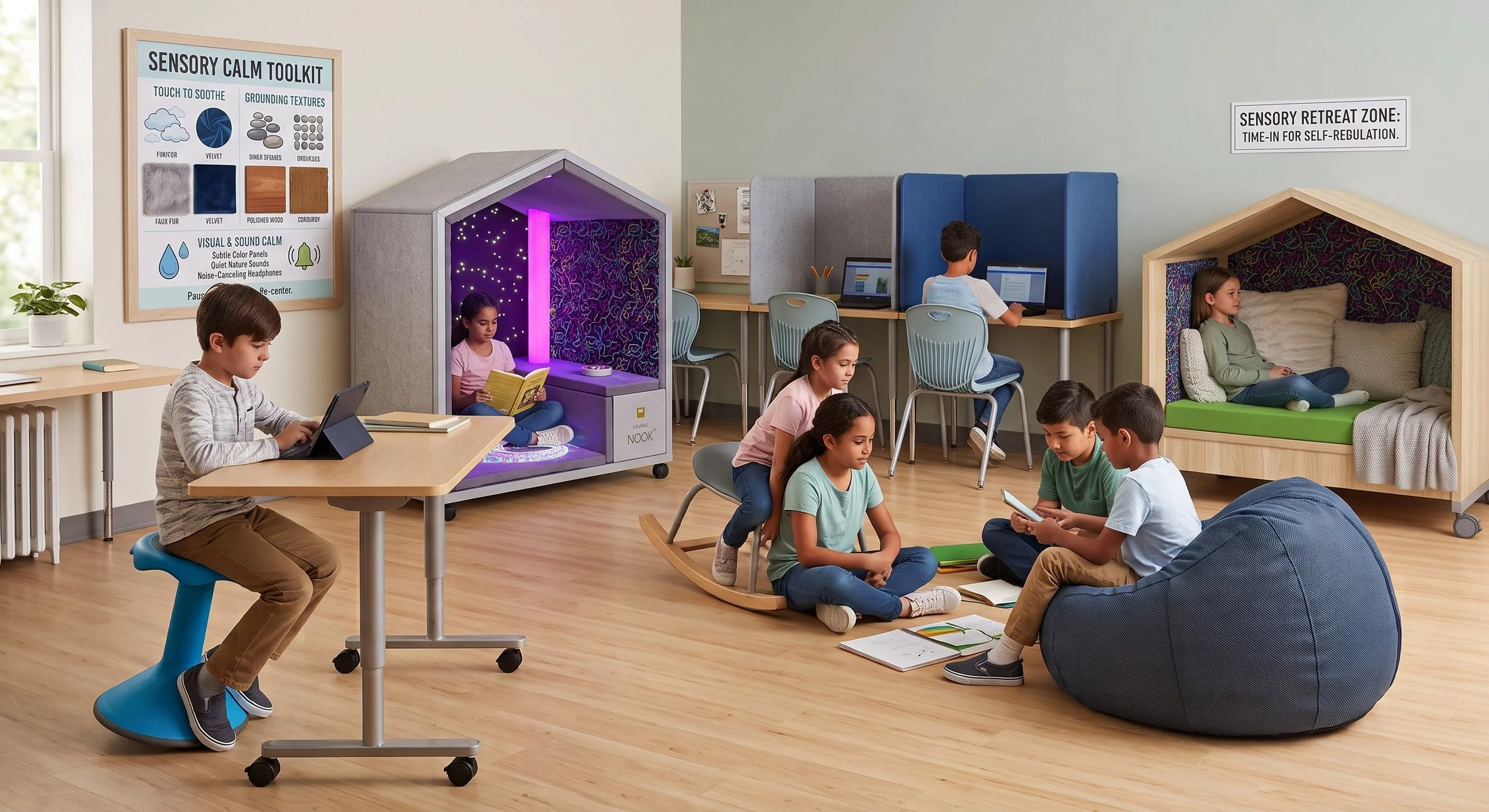
The traditional school desk—a hard plastic chair permanently attached to a laminate writing surface—enforces a singular, static physical posture. Yet, developmental neuroscience and occupational therapy explicitly tell us that learning is not a static event. For many neurodivergent students, particularly those with ADHD and sensory processing differences, movement is not a distraction from learning; it is the vital physiological mechanism through which they learn.
The Biological Necessity of Intuitive Micro-Movements
Students with ADHD often require "vestibular input"—sensory signals related to balance and spatial orientation processed in the inner ear—to sustain executive function and focus. Groundbreaking clinical research, such as studies conducted by the University of Central Florida on ADHD and working memory, demonstrates that the excessive motor activity (fidgeting) seen in children with ADHD is actually a subconscious compensatory mechanism.
When these students move, they stimulate their nervous system to increase the release of dopamine and norepinephrine, neurotransmitters essential for alertness and complex cognitive processing. When a classroom relies entirely on rigid seating, students are forced to suppress their natural physiological need for movement. They end up expending all of their cognitive energy and working memory just trying to sit still, leaving nothing in reserve to absorb the lesson.
Erasing the Stigma Through a Universal Menu of Posture
In the past, a student who demonstrably needed movement or sensory input was often given a bright, distinctly different "special chair" or a heavily weighted vest that immediately singled them out to their peers. This well-intentioned isolation often spiked the student's affective filter, increasing anxiety and social stigma, which ironically counteracted the benefits of the physical accommodation.
An inclusive, neuro-intelligent classroom erases this stigma by applying the principles of Universal Design for Learning (UDL) to the physical environment. By replacing the uniform desk with a universal menu of ergonomic options available to all students, educators can tailor the room to diverse sensory profiles without isolating any individual. These student types include:
High Vestibular Needs (The Need to Move): For students who need constant micro-movements to maintain cerebral blood flow and focus, classrooms should offer wobble stools, standing desks with built-in fidget bars, or active-seating nodes. These allow a gentle, continuous rock or sway without visually or acoustically disrupting the students around them.
High Proprioceptive Needs (The Need to Feel Grounded): Proprioception refers to the sensory receptors in the joints and muscles that tell the brain where the body is in space. Students who lack this bodily awareness often crave deep pressure and physical boundaries. Research in sensory integration therapy shows that deep touch pressure (DPT) actively calms the sympathetic nervous system (the "fight or flight" response) and boosts serotonin. These students benefit immensely from soft, enclosed seating pods, floor rockers, or structured bean bags that provide a sense of secure physical containment.
Easily Overstimulated (The Need to Filter): Students with high visual or auditory sensitivity need to block peripheral distractions that overwhelm their sensory gating systems. These students require the option of individual desks equipped with acoustic privacy screens, or high-sided focused carrels positioned to face away from high-traffic zones like doors and windows.
Designing the "Time-In" Space
Perhaps the most vital, yet overlooked, addition to a neuro-intelligent layout is the Sensory Retreat Zone. When the autonomic nervous system becomes overloaded by sensory input, a student can experience an amygdala hijack—a literal inability to access the logical, learning centers of the brain. For a student experiencing this overwhelm, the ability to step away into a designated quiet corner equipped with soft seating, a sheltered nook, and sensory tools is essential to reset their nervous system.
Crucially, this is not a punitive "time-out" space used for disciplinary isolation. It is a proactive "time-in" space designed for self-regulation and building interoception (the ability to recognize and respond to one's internal bodily signals). When we design classrooms that give students agency over their physical posture and their immediate sensory environment, we stop fighting their biology. Instead, we treat them as active, capable partners in their own education.