
Beyond the traditional five senses lies a critical, often-overlooked factor in education: vestibular and proprioceptive processing. By understanding these two hidden sensory systems, we can fundamentally rethink how classroom design impacts learning.
A child who struggles to remain seated may benefit from appropriate movement opportunities. A student who seeks physical resistance may find certain hands-on activities helpful. Another may simply need a quieter, more stable space to feel comfortable and engaged.
By recognizing these differences, educators can move beyond a one-size-fits-all classroom model.
Sensory-friendly environments are not about eliminating challenges or guaranteeing improved academic performance. They are about removing unnecessary barriers, supporting student participation, and offering meaningful choices.
Beyond Sensory Rooms: A Whole-Classroom Approach
One of the most important developments in learning environment design is recognizing that sensory support should not be restricted to a dedicated sensory room.
Although specialized sensory spaces can serve an important purpose, everyday classrooms can also incorporate principles that support sensory comfort, movement, and individual choice.
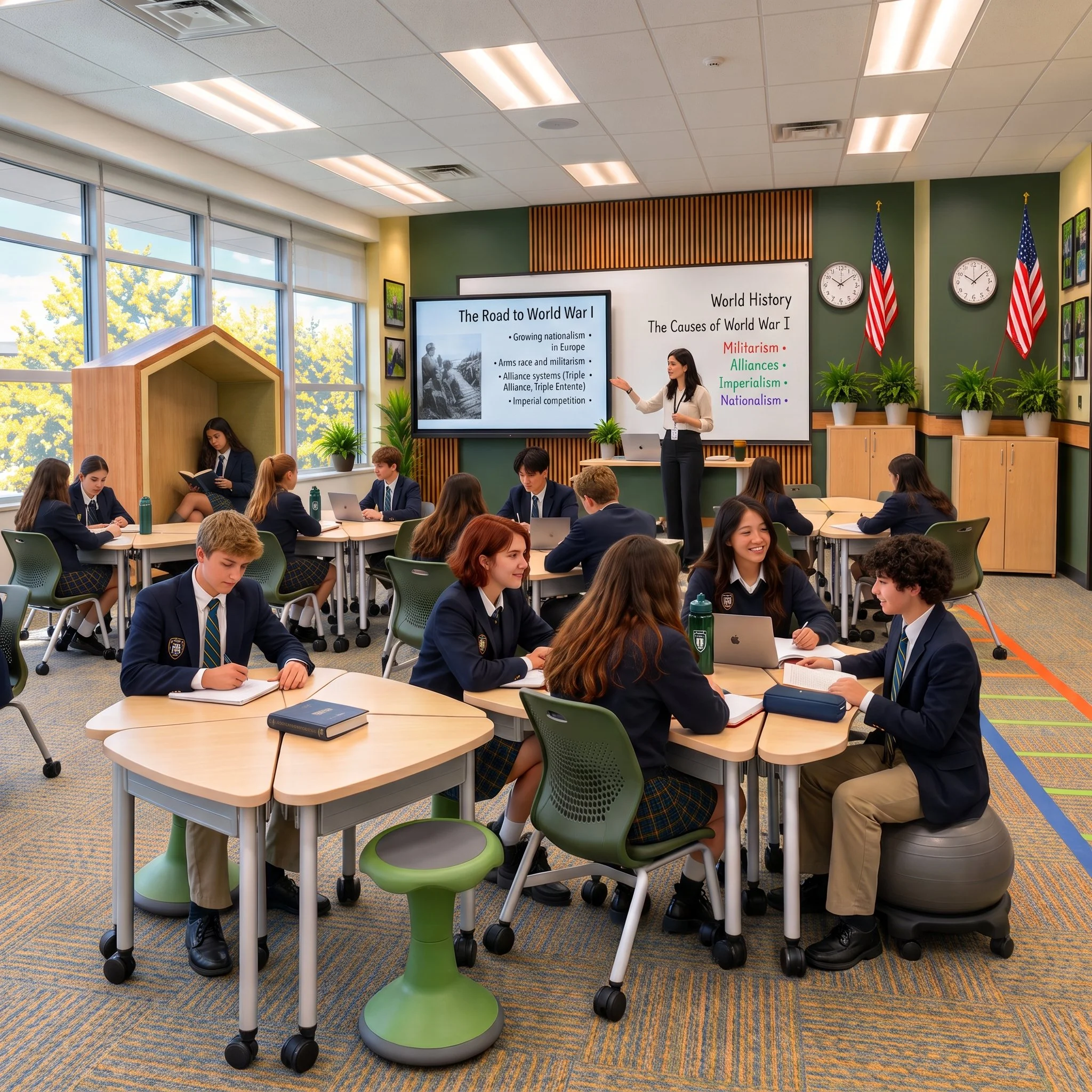
A thoughtfully designed learning environment might include collaborative workstations, quiet individual learning areas, flexible furniture, movement opportunities, and accessible sensory resources.
The objective is not to create a classroom filled with sensory equipment.
It is to create an environment that recognizes different sensory needs and gives children appropriate opportunities to move, focus, explore, and participate.
This approach can support broader goals of inclusive education by making learning environments more adaptable to the students who use them.
Classrooms Built for Movement and Body Sense
Understanding these sensory systems is only the beginning. The next step is translating that knowledge into practical learning environments. Rather than creating one space intended to meet every student's needs, educators can incorporate a range of thoughtfully designed zones and furnishings.
Flexible Seating and Furniture
Providing a selection of appropriately sized chairs, stable seating, standing workstations, and selected movement-friendly seating options allows students to work in positions suited to their activities and individual needs.
Movement and Activity Zones
Designated areas for movement, stretching, balance activities, and physical exploration can give children opportunities to engage their vestibular and proprioceptive systems without disrupting the entire classroom.
Sensory Retreat Spaces
Quiet, comfortable spaces can offer students an opportunity to reduce environmental stimulation and practice self-regulation strategies. These areas may include supportive seating, soft furnishings, and selected sensory resources.
Hands-On Learning Environments
Manipulatives, construction materials, robotics activities, building blocks, and other tactile learning tools encourage students to use physical movement and body awareness while exploring academic concepts.
Clear and Accessible Classroom Layouts
Organized pathways, appropriately spaced furniture, and clearly defined learning zones can help students navigate their surroundings comfortably and safely.
Where specialized sensory equipment is introduced, educators should consider supervision, accessibility, equipment safety, and recommendations from appropriately qualified professionals, such as occupational therapists.
Providing the Support You Need
At Oxilium, we believe effective learning environments should reflect the diverse ways children develop, interact, and learn.
By integrating thoughtful spatial design, adaptable furniture, appropriate technology, and sensory-aware learning resources, we help educators create environments that support movement, exploration, comfort, and engagement.
Because when learning spaces accommodate the way children experience the world, we create more opportunities for every child to participate, discover, and grow.