
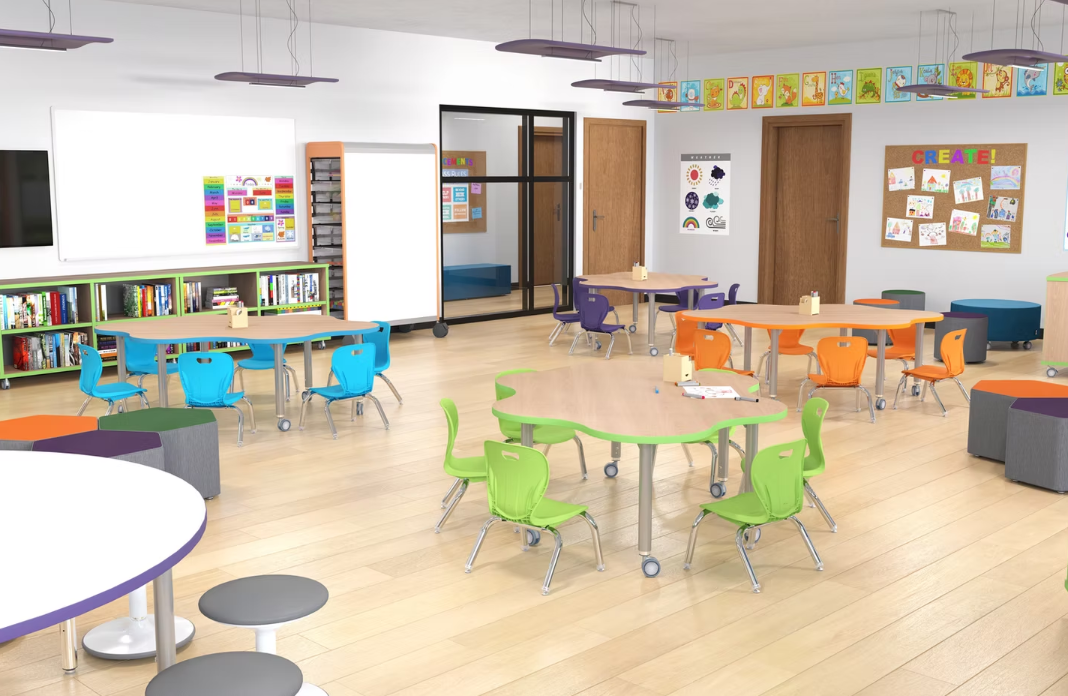
Designing Neuro-Inclusive Learning Spaces
CLASSROOMS
Designing Spaces That Remove Barriers Before the Lesson Even Begins.
What is a Neuro-Inclusive Classroom?
A classroom thoughtfully designed to support how students naturally learn—balancing sound, light, and layout so every learner feels calm, inspired, and fully empowered to do their best learning.

Visual Silence
Cutting down on wall clutter and busy background motion. Blocking out everyday distractions takes the stress off students' senses, helping them save mental energy and focus on learning.

Built-in Movement
Building physical movement into everyday classroom routines. Letting students move in controlled ways gets the wiggles out so they can stay calm, focused, and engaged.

Acoustic Regulation
Soaking up echo and harsh noise with smart room design. Cutting down loud background sounds protects students from sensory overload, lowering their stress so they stay calm and grounded.

Digital Harmony
Balancing classroom tech with gentle sound and screens. Setting up displays and speakers properly prevents glare and noise, keeping students from feeling overwhelmed.
Sensory-Smart Zoning
SPATIAL WELL-BEING
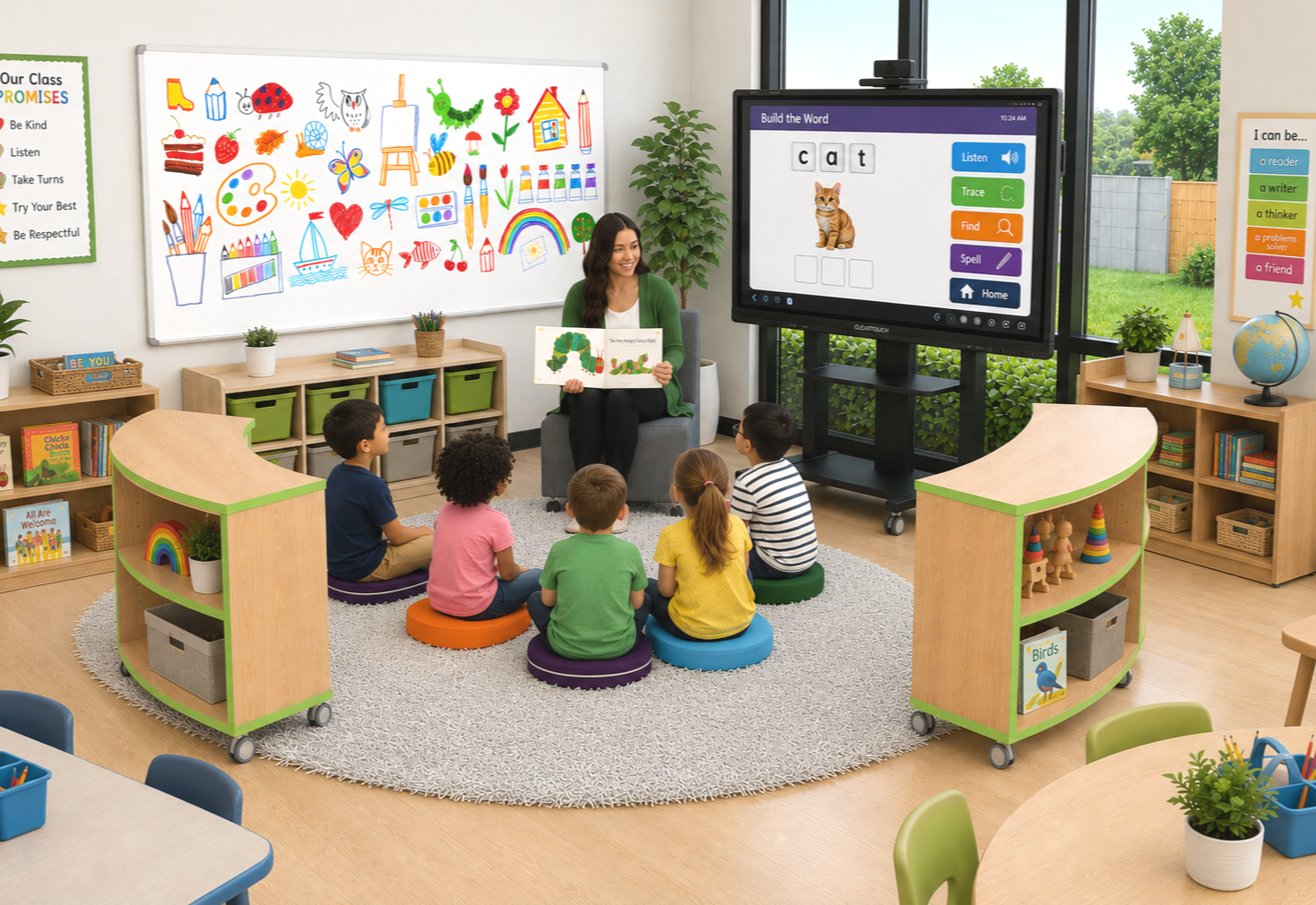
A neuro-intelligent classroom effectively blends flexible furniture with smart AV tools and sensory supports so every student can focus and thrive.
Smart Audio-Visual
Removes digital friction and sensory anxiety, ensuring every student can absorb information and participate effortlessly.
Interactive panels
Sound masking
Assistive listening
Voice Amplification
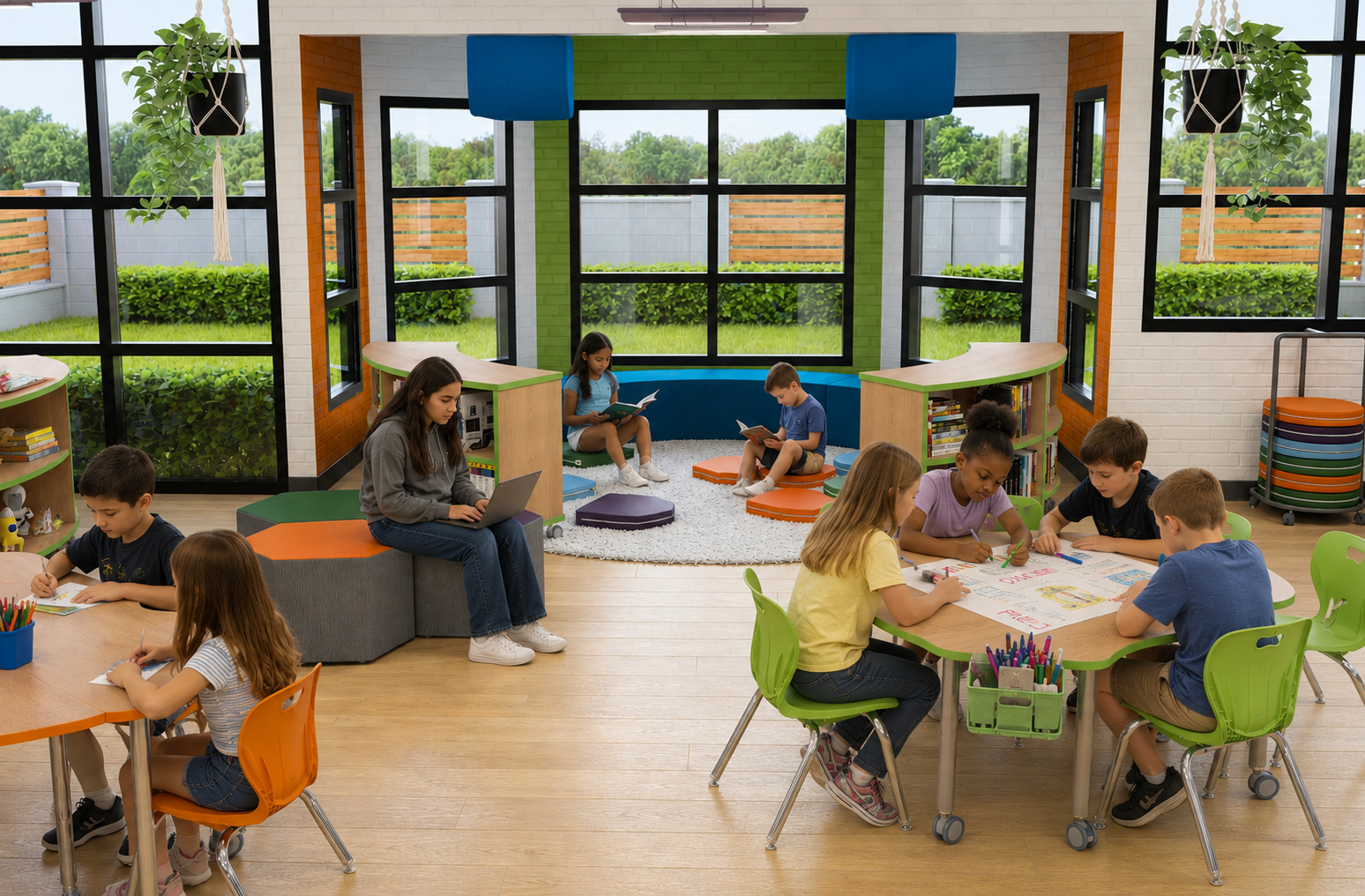
Flexible Furniture
Adaptable seating that allows students to move, adjust position, and regulate physical energy naturally without disrupting others.
Modular soft seating
Height-adjustable desks
Wobble Stools
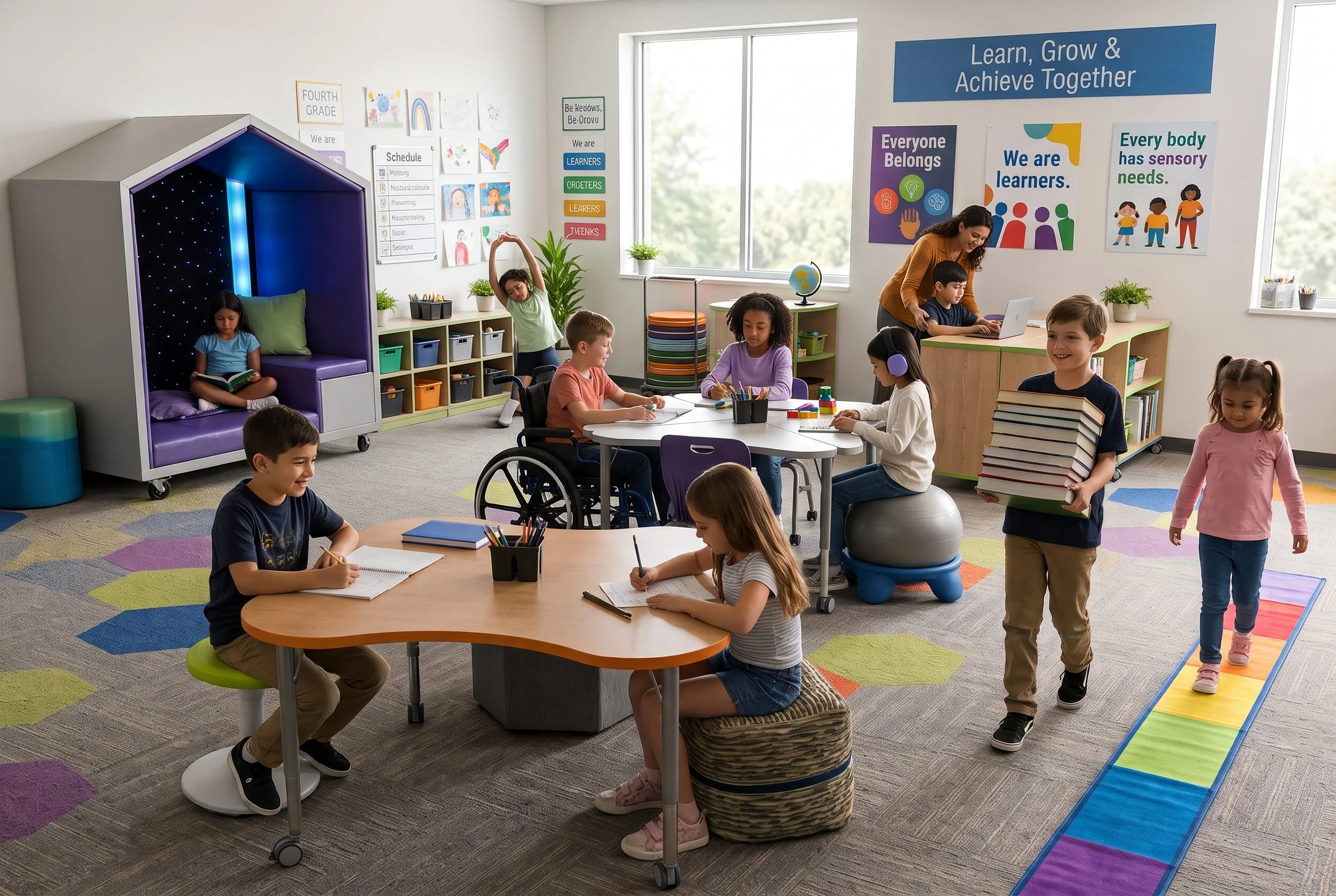
Mobile desks and chairs
Sensory Support
Provides a targeted micro-zone and tactile tools that give students agency over their own sensory regulation.
Sensory pods
Acoustic privacy pods
Sensory tables
Video walls
Unified Infrastructure
Builds a hidden, reliable foundation that removes stress, sensory overload, and digital friction before instruction even begins.
Mass communication
Room control and automation
Centralized device management
Signal distribution and routing
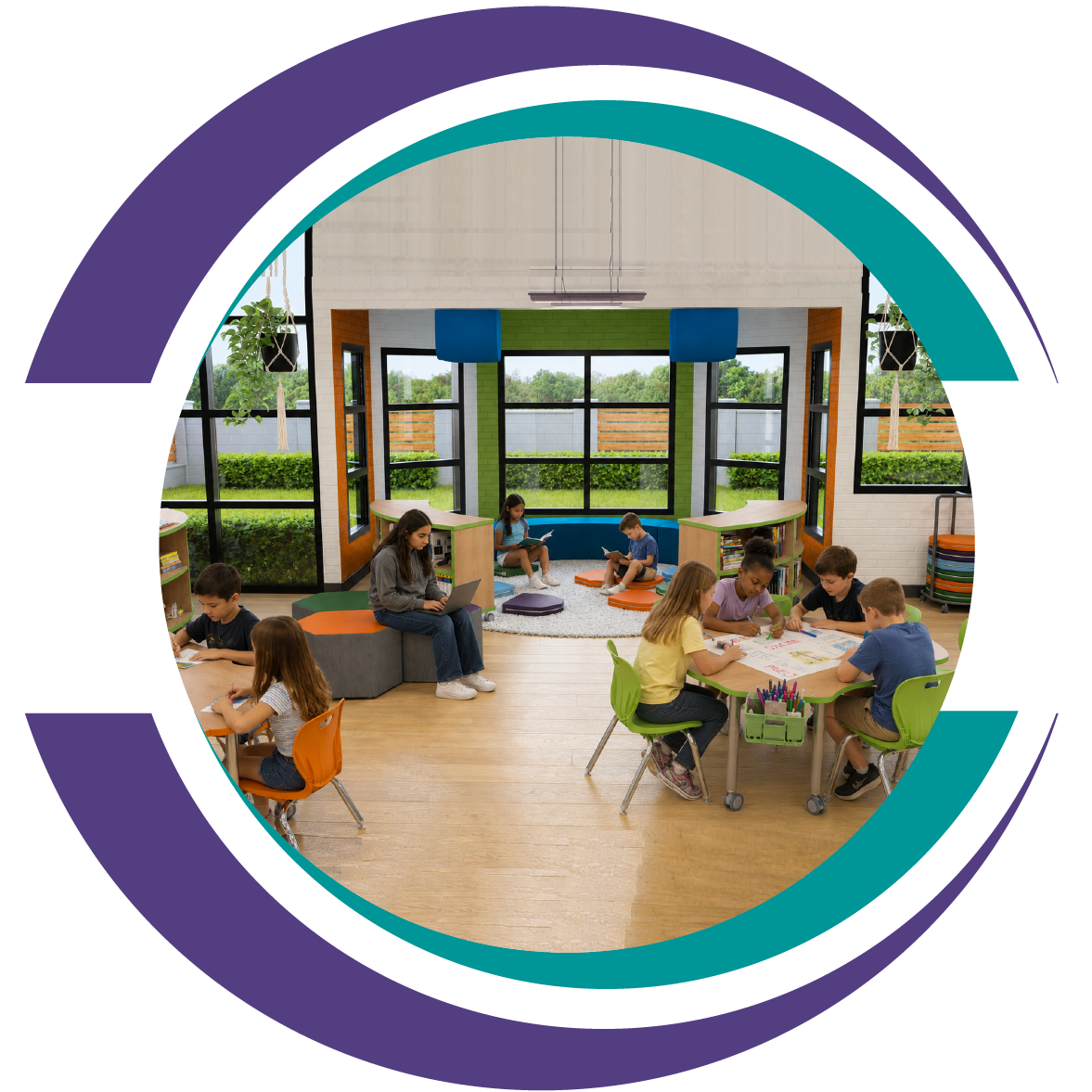
Designing Neuro-Inclusive Classrooms Built for Every Learner.
Modern K-12 education has evolved beyond rows of static desks to embrace neuro-inclusive learning environments tailored to diverse sensory and cognitive needs. A truly supportive classroom pairs flexible school furniture with adaptive AV technology and intentional sensory zoning, ensuring neurodivergent students—from ADHD to autism—aren't just present, but regulated, focused, and actively engaged. By applying Universal Design for Learning (UDL) directly to the physical environment, schools create inclusive, high-impact spaces where every student can learn, belong, and thrive.
Read our blog,
“A School District’s Guide to Neurodiverse Classroom Design.”
COLLABORATIVE APPROACH
Meeting You Where You Are.
We're a team of passionate thinkers and doers. Inclusion and value drive everything we do. Our process to design and create new spaces is simple, thoughtful, and aligned with your needs. We believe great results come from clear steps, open collaboration, and a shared sense of purpose.
Discover.
Identify needs through onsite visits and customer collaboration

Design.
Transform vision and goals into purposeful, tailored spatial plans

Procure.
Confirm funding, obtain approvals and secure essential elements

Implement.
Turn designs into functional, ready-to-use spaces

Support.
Empower users and ensure long-term, sustainable success
Clarity Backed by Expertise
A neuro-inclusive classroom is a learning environment intentionally designed to accommodate diverse neurological profiles, including students with autism, ADHD, dyslexia, and sensory processing differences. Instead of forcing students to adapt to a rigid environment, the physical space provides flexible seating, sensory regulation zones, and optimized lighting and acoustics to remove barriers to learning.
What is a neuro-inclusive classroom?
1
Neuro-inclusive design operates on the principles of Universal Design for Learning (UDL). Designing for students with the highest sensory needs naturally creates a better environment for everyone. For example, improving classroom acoustics helps students with auditory processing issues, but it also increases comprehension and reduces vocal strain for teachers and general education students.
Why are inclusive learning spaces important for all students?
2
Oxilium takes a data-driven, four-phase approach to transform your space. We begin with a Comprehensive Environmental Audit to map out existing sensory barriers like harsh lighting and poor acoustics. Next, we execute Strategic Space Planning, creating specific high-stimulus and low-stimulus zones. We then Curate and install commercial-grade flexible seating, acoustic dampening, and lighting systems. Finally, we provide Educator Onboarding to ensure your staff knows exactly how to utilize the new environment to support their students.
How does Oxilium Services produce neuro-inclusive designs?
3
What are the core elements of a sensory-friendly classroom?
4
The most critical elements focus on reducing cognitive load and physical discomfort. This includes replacing flickering fluorescent lights with dimmable LEDs, installing acoustic panels to absorb background noise, providing vestibular-stimulating seating (like wobble stools or rockers), and establishing clear visual boundaries so students know exactly what is expected in each zone of the room.