
How to Design Inclusive School Environments
Few things in teaching are more rewarding than watching students explore, create, and think in their own unique ways. As a teacher, you frequently see students with fast-paced minds, vibrant energy, and remarkably creative approaches to learning.
Sometimes, these energetic traits present focus or executive function challenges that mirror ADHD. Whether a family hasn't started a formal evaluation or is simply on their own journey toward understanding their child's neurodiversity, that’s completely okay. You don't need a medical label to design a space where every student can truly thrive.
By using Universal Design for Learning (UDL), you can proactively build a classroom that celebrates how different brains work. When we shift our focus from "fixing a problem" to "unlocking potential," we create a joyful, supportive space for everyone.
Here are simple, practical ways to support neurodivergent learners right now:
1. Design a Responsive, Welcoming Space
Students with vibrant, active minds often experience the world with higher sensory awareness. Tailoring their physical space can help them feel comfortable, grounded, and ready to learn.
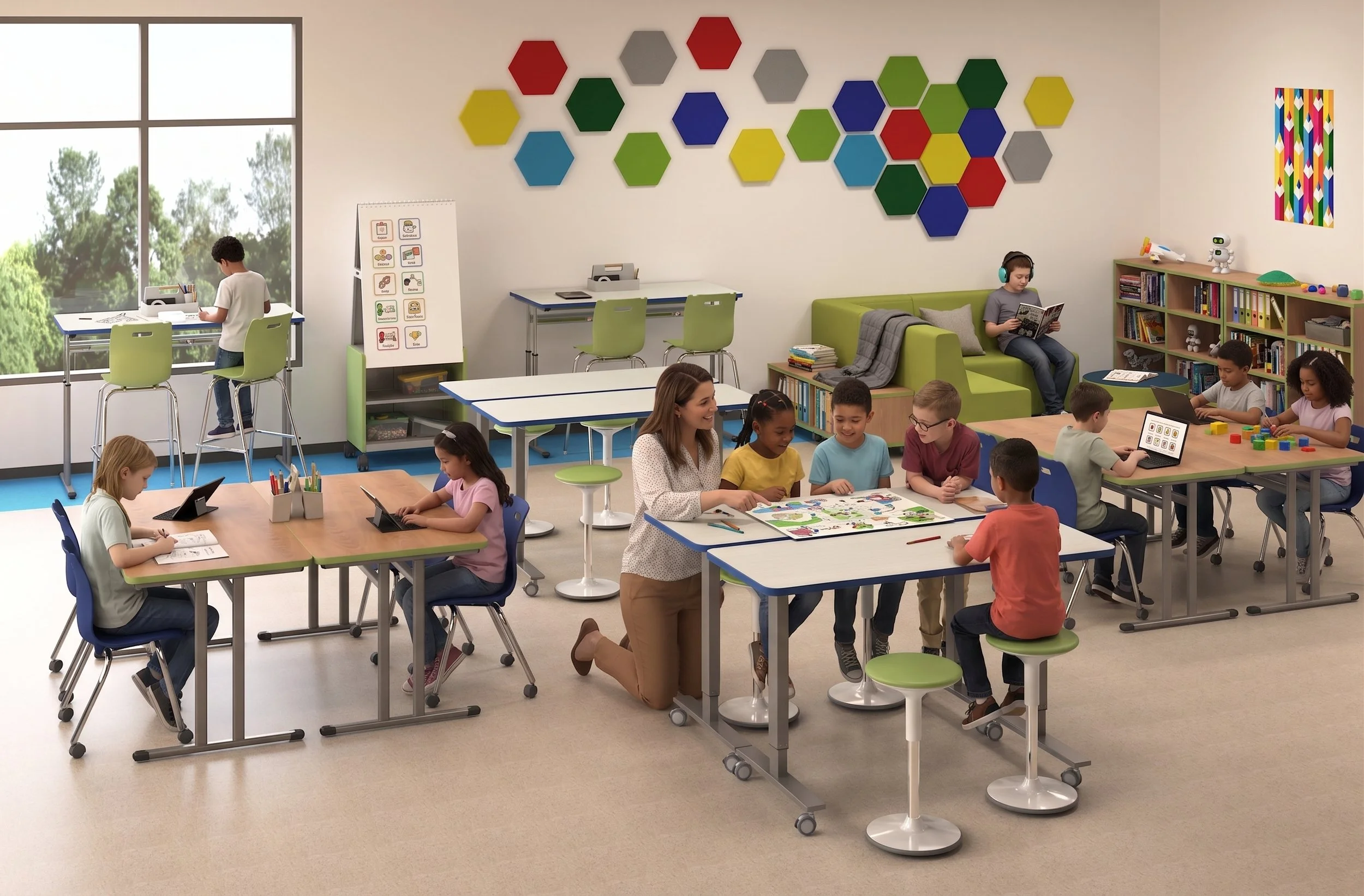
Thoughtful Seating: Invite the student to sit in a space that sets them up for success—usually near the heart of the instruction, away from high-traffic zones that might break their concentration.
Offer Choice and Comfort: Movement is a natural, healthy way for many kids to process information. Allow the student to choose a wobble stool, a standing desk, or attach a colorful resistance band to their chair so they can quietly fidget or subtly move while they work.
Create a Peaceful Retreat: Designate a cozy, comfortable, low-stimulation corner of the room. Frame this not as a "time-out" spot, but as a calming oasis where any student can choose to go when they want to relax, recharge, or focus on their favorite subject.
2. Empower Their Executive Functioning
Skills like time management and multi-step planning are still developing for young minds. We can set them up for success by making these abstract concepts highly visual and fun to achieve.
Make Time Visual: Use a colorful, physical timer on the board during independent work. Seeing the bright color gently tick down helps them visualize time and turns focus into an engaging, achievable goal.
Create Bite-Sized Wins: Instead of giving a long list of verbal instructions, write three simple steps on a bright sticky note for their desk. This allows them to experience the satisfying feeling of crossing tasks off one by one!
Celebrate the Routine: Keep a highly visible, predictable daily schedule on the board. When transitions are coming up, offer cheerful 5-minute and 2-minute warnings so they feel secure and prepared for what’s next.
3. Nurture Confidence and Connection
Neurodivergent students thrive on encouragement. By shifting how we guide them, we can build their self-esteem and foster a deep love for learning.
A "Secret Handshake" for Focus: Instead of correcting a student publicly, create a special, silent signal just for the two of you. A gentle tap on their desk or a specific smile can be a warm, private way to guide their attention back without any embarrassment.
Provide Purposeful Leadership: When you notice a student has extra energy to burn, give them a meaningful task. Ask them to be the one to carry a stack of books to the library or hand out the art supplies. This channels their energy into a confidence-boosting leadership activity.
Catch Them Shining: Make a conscious effort to praise their unique strengths. When they share a creative idea, transition smoothly, or show deep focus, celebrate it immediately.
Building a Joyful Partnership with Parents
When communicating with parents who might be unsure about evaluations or diagnoses, the best approach is to lead with shared love and positive observations. You don't need to use the word "ADHD" or “Neurodiverse” to be an effective ally for their child.
Focus entirely on the child's strengths and how you want to partner together to support them:
Instead of focusing on the challenge: "He can't sit still while reading."
Try leading with the positive: "He brings such wonderful enthusiasm to our reading block. I've noticed he focuses beautifully when he has a little room to move, so I’m giving him a standing desk to channel that great energy. What fun ways do you help him focus on activities at home?"
By focusing on their child's potential rather than a diagnostic label, you build a bridge of trust. You establish yourself as a caring advocate who is excited to help their child succeed, creating a beautiful team approach to their education.