
How Spatial Zoning and UDL Transform Inclusive Libraries
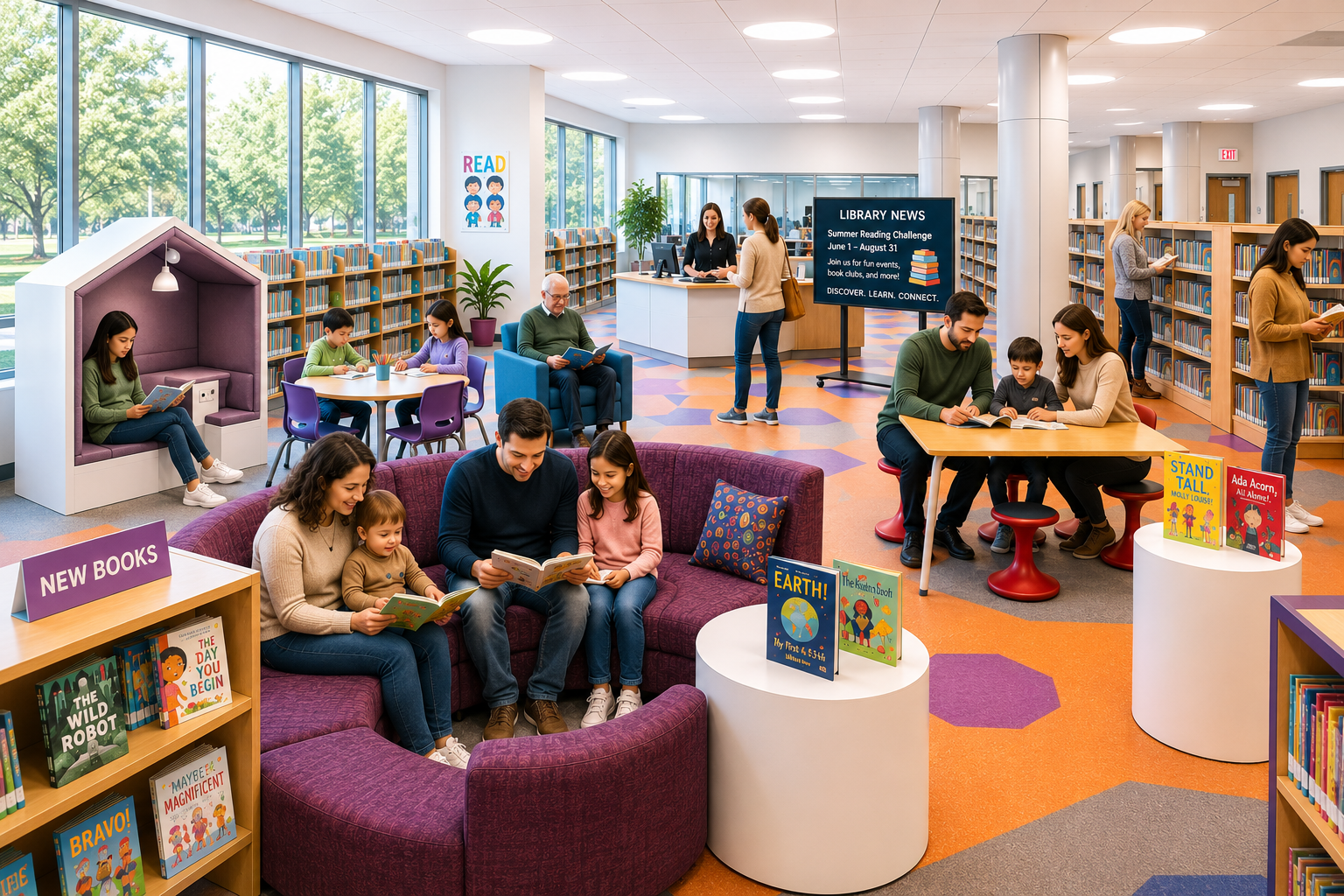
The traditional library model relied on enforced, monolithic silence. The modern open-concept response often swung to the opposite extreme: an unscripted, sensory-heavy environment where noise and visual stimulation compete for attention. Neither extreme serves the modern learner.
Research in inclusive library design proves that spatial zoning—structuring the library into distinct, purpose-driven areas with clear physical and acoustic boundaries—is essential for supporting neurodivergent patrons and students (including those with Autism, ADHD, or sensory processing differences) while maximizing cognitive focus for all users.
Rather than enforcing uniform silence across an open floor or relying on an unscripted open layout, spatial zoning provides environments tailored to varied sensory, cognitive, and social needs. By pairing spatial zoning with Universal Design for Learning (UDL) principles, library directors, administrators, and school leaders can replace outdated, compliance-based management with intuitive, research-backed spatial architecture.
Here is how to structure a UDL-aligned, zoned library engineered for inclusive exploration, deep focus, and self-regulation.
The 6 Essential Library Zones
1. Deep Focus Zone
The Design: High-backed acoustic pods, high-walled solo study carrels, dim or natural lighting, sound-dampening wall panels, and low-traffic perimeter positioning equipped with personal task lighting and clear visual sightlines.
The Impact: Engineered for low-stimulation, quiet study environments ideal for solo research, writing, and test preparation. By stripping away unpredictable visual noise and establishing clear personal space boundaries (typically 45–120 cm), this zone minimizes executive function load and prevents distraction.
UDL Alignment:
Engagement: Minimizes visual and auditory threats, supporting sustained effort and deep focus.
2. Collaborative Commons
The Design: Acoustic-managed small group areas outfitted with modular seating, sound-absorbing ceiling baffles, writable table surfaces, and explicit spatial separation from quiet zones.
The Impact: Facilitates small group projects, peer tutoring, and structured brainstorming. Clear spatial cues set explicit proximity expectations, making group interaction far less overwhelming for learners with social communication differences.
UDL Alignment:
Action & Expression: Provides a dedicated arena for peer collaboration, group problem-solving, and shared task execution.
3. Digital Discovery Lab
The Design: Dedicated media creation suites or workstations equipped with specialized software, media creation tools, digital editing hardware, and accessible technology resources.
The Impact: Serves as the library's engine for digital exploration, media creation, and content editing. It allows users to consume and produce information across multiple digital channels, reducing text-decoding barriers.
UDL Alignment:
Representation & Action & Expression: Offers alternative digital formats for comprehending complex media while providing advanced tools for digital composition.
4. Makerspace (Active / Kinesthetic Discovery Zone)
The Design: A dedicated zone for hands-on discovery, prototyping, and fabrication, outfitted with standing desks, wobble stools, tactile materials, mobile writable surfaces, and fidget tools.
The Impact: Allows sensory-seeking learners (such as those with ADHD) to satisfy vestibular and proprioceptive movement needs while staying actively engaged in research, tinkering, and project creation.
UDL Alignment:
Action & Expression: Integrates tactile, kinesthetic modalities for learning, construction, and physical expression.
5. Sensory Retreat
The Design: Enclosed or private areas featuring low-stimulation lighting, sound-dampening acoustic treatments, deep-pressure seating options, and soothing tactile tools.
The Impact: Specifically designed to support sensory relief, quiet reading, and emotional self-regulation. Gives hyper-sensitive individuals a safe, predictable nook to decompress from visual or auditory overload before reaching a crisis point.
UDL Alignment:
Engagement (Self-Regulation): Directly protects the nervous system, equipping users with emotional coping mechanisms and sensory resets so they can re-engage with academic work.
6. Multi-Use Zone
The Design: A large, highly configurable space designed to tolerate conversational noise, equipped with mobile flexible seating, presentation technology, and adaptable perimeter dividers.
The Impact: Accommodates full-class instruction, community presentations, group meetings, and casual socializing without disrupting neighboring focus micro-environments.
UDL Alignment:
Representation & Engagement: Serves as a flexible staging area to present baseline instruction, activate background knowledge, and foster community belonging.
Key Research-Backed Benefits
Implementing an evidence-based zoning strategy delivers measurable operational and cognitive advantages:
Self-Directed Sensory Modulation: Designated active versus low-stimulation zones empower neurodivergent students and patrons to self-regulate by selecting spaces that match their immediate sensory processing needs.
Reduced Disciplinary Friction: Architectural and acoustic boundaries replace verbal enforcement (such as constant "shushing"), creating intuitive behavioral expectations and lowering user anxiety.
Executive Function Scaffolding: Explicit physical separation between makerspaces, collaborative commons, and quiet nooks acts as an external cognitive cue, simplifying transitions and reducing task-switching friction.
Autonomy & Self-Advocacy: Offering flexible environmental choices builds personal agency, helping users manage their energy levels, sensory profiles, and study habits effectively.
Driving Meaningful Change
Transitioning a library from a static storage repository into a dynamic learning commons requires intentional environmental architecture. When school leaders and library administrators shift the burden of adaptation off the patron and onto the space, they create an inclusive, self-regulating ecosystem where every learner can perform at their highest potential.
Core Research & References
Information & Learning Commons Framework: Beagle, D. (2006). The Information Commons Handbook. Neal-Schuman Publishers / American Library Association.
AASL Active Learning Space & Zoning Framework: American Association of School Librarians (AASL). Library Zones & Active Learning Spaces. AASL Knowledge Quest.
Four-Space Model for Libraries: Danish Agency for Culture and Palaces. Model Programme for Public & Educational Libraries.
Sensory Architectural Zoning (ASPECTSS™ Index): Mostafa, M. (2008). An Architecture for Autism: Concepts of Design Intervention for the Autistic User. Archnet-IJAR, 2(1), 189–211.
Empirical Acoustic Zoning & Environmental Psychology: MDPI Buildings Research. Empirical Analysis of Library Acoustic Zoning & Spatial Perception.